
The fresh herb guide
Fresh Dill: Flavor, Uses, Storage & Cooking Tips
Discover the delicate flavor and versatility of fresh dill, an aromatic herb that brings a bright, refreshing touch to everyday cooking.
From creamy dressings and crisp salads to roasted vegetables, seafood, and homemade sauces, fresh dill adds distinctive flavor to countless dishes. Explore its culinary history, flavor profile, nutritional considerations, preparation techniques, and expert tips for selecting, storing, and cooking with this fragrant herb.
Jump to Details & Helpful Tips
Use the table links to explore the topics covered in this article and quickly navigate to the information you’re looking for.
Fresh Dill
Looking for a simple way to bring fresh flavor to your favorite dishes? Fresh dill might be the secret ingredient your kitchen has been missing! With its delicate, feathery green leaves, refreshing aroma, and bright, slightly sweet flavor, this versatile herb can transform everyday recipes into something special. From creamy dressings and crisp salads to roasted vegetables and savory seafood, fresh dill adds a delightful burst of flavor that enhances every bite. Discover how to select, prepare, store, and cook with fresh dill, along with creative ways to incorporate this aromatic herb into your everyday cooking.
What is Fresh Dill?
Fresh dill (Anethum graveolens) is a fragrant, delicate herb known for its feathery green leaves and distinctive, slightly sweet flavor with hints of anise, citrus, and grassy freshness. A member of the parsley family (Apiaceae), dill is native to parts of Europe and Asia and has been used for centuries in Mediterranean, Eastern European, and Scandinavian cuisines. Fresh dill is also commonly called dill weed, a term that refers to the tender, leafy portion of the dill plant rather than its seeds.
The name dill weed is frequently found on packaged dried dill leaves, although it describes both fresh and dried dill foliage. These aromatic leaves add a bright, refreshing flavor to seafood, salads, soups, vegetables, sauces, and creamy dressings. Unlike dried dill, fresh dill offers a more vibrant aroma and delicate flavor, making it especially appealing as a finishing herb. Both the leaves and seeds are edible, although dill seeds have a stronger, warmer flavor and are commonly used in pickling and seasoning blends.
Fresh Dill: The Origin & History
Dill (Anethum graveolens) has a rich culinary history dating back thousands of years, with origins in the Mediterranean region and parts of western Asia. This aromatic herb was valued by ancient civilizations, including the Egyptians, Greeks, and Romans, for its distinctive fragrance, culinary versatility, and traditional medicinal uses. Historical records suggest that ancient Egyptians used dill in herbal preparations, while the Greeks and Romans incorporated it into foods and associated it with prosperity and good fortune.
As trade routes expanded, dill spread throughout Europe, becoming especially popular in Scandinavian, Eastern European, and Mediterranean cuisines. Its delicate, feathery leaves were used to flavor fish, vegetables, soups, and sauces, while its seeds became an important ingredient in pickling and preserving foods. Today, fresh dill remains a beloved culinary herb, prized for its bright, slightly sweet flavor and its ability to enhance everything from traditional dishes to modern recipes.
What Does Fresh Dill Taste Like?
Fresh dill has a bright, refreshing flavor with delicate notes of anise, citrus, and mild grassy sweetness. Its distinctive taste is slightly tangy and herbaceous, with subtle hints of licorice that complement rather than overpower other ingredients. Unlike stronger herbs such as rosemary or oregano, fresh dill has a light, delicate flavor that pairs beautifully with seafood, potatoes, cucumbers, eggs, and creamy sauces. Its tender, feathery leaves are most flavorful when used fresh, as prolonged cooking can diminish their aroma and taste. For the best results, add fresh dill toward the end of cooking or just before serving to preserve its vibrant flavor and fragrance.
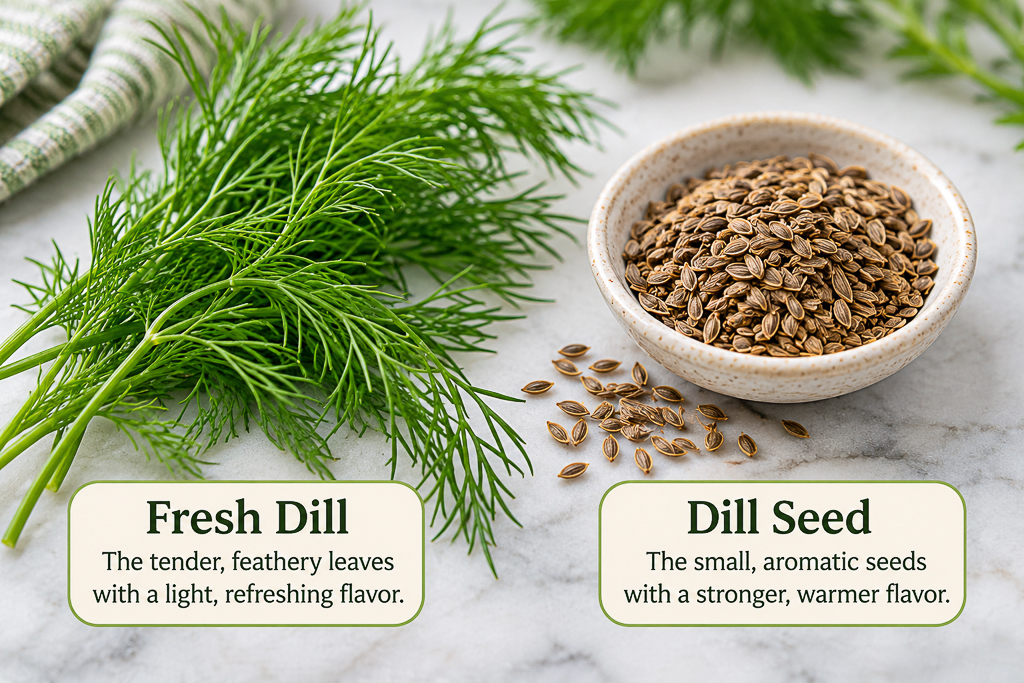
Fresh Dill vs. Dill Seed
Although fresh dill and dill seed come from the same plant (Anethum graveolens), they offer distinctly different flavors and culinary uses. Fresh dill refers to the tender, feathery green leaves, which have a light, refreshing taste with subtle notes of anise and citrus. Dill seeds, on the other hand, have a stronger, warmer, slightly bitter flavor with hints of caraway. Fresh dill is ideal for seafood, salads, vegetables, and creamy dressings, while dill seeds are commonly used in pickling, breads, spice blends, and slow-cooked dishes. Because their flavors differ considerably, they are not always interchangeable in recipes.
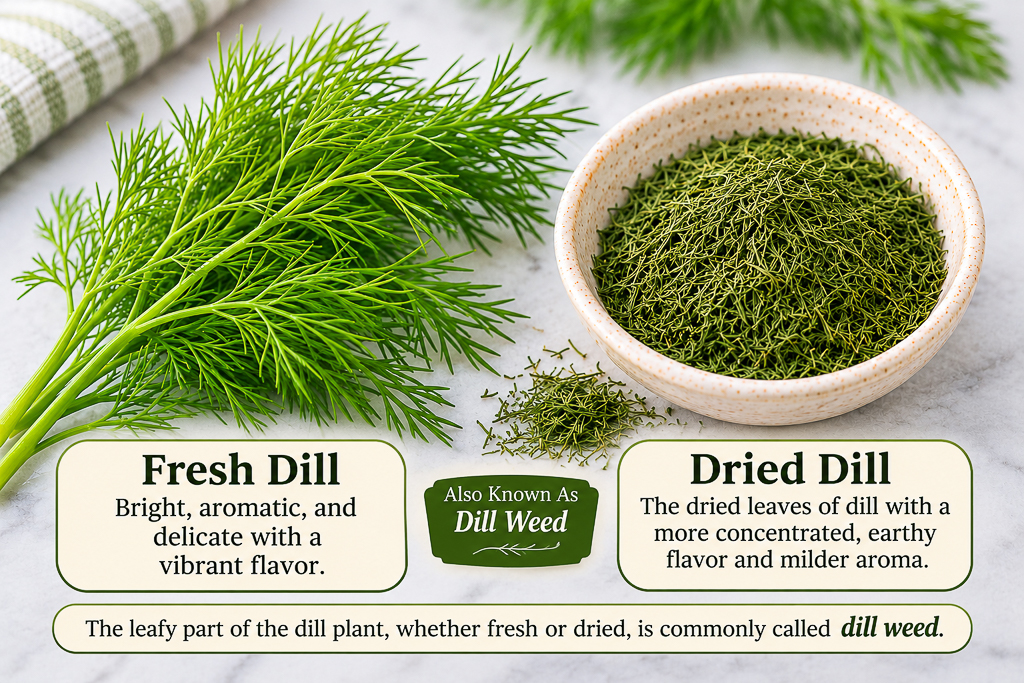
Fresh Dill vs. Dried Dill
Although fresh dill and dried dill come from the same plant, their flavor, aroma, and culinary uses differ. Fresh dill has delicate, feathery green leaves with a bright, refreshing taste and subtle hints of citrus and anise. Dried dill, often labeled dried dill weed, has a more concentrated flavor by volume but loses some of the fresh herb’s vibrant aroma during drying.
Fresh dill is especially delicious in salads, seafood dishes, creamy dressings, and sauces where its delicate flavor can shine. Dried dill works well in soups, marinades, dips, and cooked dishes where convenience and longer storage are priorities.
How to Cook with Fresh Dill
Cooking with fresh dill is a simple way to add bright, aromatic flavor to everyday meals. Its delicate, feathery leaves complement seafood, chicken, eggs, potatoes, cucumbers, and a variety of vegetables. Popular in Scandinavian, Mediterranean, and Eastern European cuisines, fresh dill brings a refreshing, slightly sweet flavor to everything from creamy sauces to hearty soups.
Delicious Ways to Use Fresh Dill
Seafood and Fish. Fresh dill is a classic pairing with salmon, shrimp, and other seafood. Sprinkle chopped dill over grilled or baked fish, combine it with lemon and butter for a flavorful sauce, or stir it into a creamy seafood dressing.
Vegetables and Potatoes. Add fresh dill to roasted potatoes, steamed carrots, green beans, or sautéed zucchini. Its light, herbaceous flavor complements vegetables without overpowering their natural sweetness. Toss cooked vegetables with butter, lemon juice, and chopped dill for a simple, flavorful side dish.
Salads and Creamy Dressings. Fresh dill adds a refreshing touch to cucumber salads, potato salads, coleslaw, and homemade dressings. Combine it with sour cream, Greek yogurt, mayonnaise, or buttermilk to create delicious dips and sauces.
Eggs and Breakfast Dishes. Stir finely chopped fresh dill into scrambled eggs, omelets, or egg salad. It also pairs beautifully with smoked salmon, cream cheese, and savory breakfast dishes. Explore the variations in our Breakfast Souffle Roll recipe.
Soups and Stews. Add fresh dill to chicken soup, vegetable soup, creamy potato soup, or traditional Eastern European dishes such as borscht. Stir it in during the final minutes of cooking to preserve its delicate aroma and flavor.
Dips, Sauces, and Herb Butter. Mix chopped dill with softened butter, lemon zest, and garlic to create a flavorful herb butter for vegetables, seafood, or bread. Fresh dill also works beautifully in tzatziki, ranch-style dressings, and yogurt-based dipping sauces.
Expert Tips for Cooking with Fresh Dill
- Add dill toward the end of cooking. Prolonged heat can diminish its delicate flavor and aroma, so stir it into hot dishes during the final minutes or sprinkle it over finished meals.
- Use the tender stems. The thin, delicate stems are edible and flavorful. Finely chop them along with the leaves, reserving thicker stems for stocks or other simmered dishes.
- Chop just before using. Fresh dill is delicate and can wilt quickly once chopped. Prepare it shortly before adding it to your recipe for the best flavor and appearance.
- Pair with complementary ingredients. Lemon, garlic, cucumber, potatoes, yogurt, sour cream, and butter enhance dill’s refreshing flavor.
- Start with a small amount. Fresh dill has a distinctive taste. Begin with a modest amount, taste your dish, and add more as desired.
When Should You Add Fresh Dill to a Recipe?
For the best flavor, add fresh dill near the end of cooking or just before serving. In hot dishes such as soups, sauces, and roasted vegetables, the final few minutes are usually sufficient to release its aroma without losing too much of its delicate character.
For cold dishes, including cucumber salads, dips, and creamy dressings, stir in chopped dill during preparation and allow the flavors to blend in the refrigerator before serving. A final sprinkle of fresh dill adds color, fragrance, and a beautiful finishing touch.
How to Store Fresh Dill
Proper storage helps preserve the delicate leaves, fresh aroma, and vibrant flavor of fresh dill. For short-term storage, remove any damaged leaves, wrap the dill loosely in a slightly damp paper towel, and place it in a resealable bag or airtight container in the refrigerator. Fresh dill generally keeps for about 5–7 days, although very fresh bunches may last longer.
For longer storage, fresh dill can be frozen without blanching. Wash and thoroughly dry the leaves, remove any tough stems, and place the dill in an airtight freezer-safe bag or container. Frozen dill is best used in cooked dishes, soups, sauces, and dressings because its tender leaves lose their crisp texture after thawing.
Proper handling is just as important as preparation when cooking with fresh herbs. Before using fresh dill, gently rinse it under cool running water and pat it dry with a clean towel or paper towel. For additional guidance on safely handling fresh produce, refer to the U.S. Food and Drug Administration’s produce safety recommendations.
Nutritional Benefits and Health Considerations
Let’s not forget the health considerations of this powerhouse herb! Beyond its culinary uses, dill boasts a range of healthy benefits. Rich in vitamins A and C, as well as antioxidants, dill promotes digestion, reduces inflammation, and supports overall immune health. Incorporating it into your diet may also aid in reducing cholesterol levels and managing blood sugar levels.
FAQS ABOUT FRESH DILL
Frequently Asked Questions
Find answers to common questions, along with helpful tips and practical advice.
What can I substitute for fresh dill?
Dried dill is the closest substitute for fresh dill, although its flavor is less bright and aromatic. Use approximately 1 teaspoon of dried dill for every tablespoon of fresh dill. Other alternatives include fresh chervil, fennel fronds, tarragon, or parsley, depending on the recipe. Chervil offers delicate anise notes, while parsley provides a milder, grassy flavor. Start with a small amount and adjust to taste.
Is fresh dill the same as dill weed?
Yes. Fresh dill and dill weed both refer to the tender, feathery leaves of the dill plant (Anethum graveolens). The term dill weed is commonly found on containers of dried dill, but it describes both fresh and dried leaves. Dill seed comes from the same plant but has a stronger, warmer flavor and is used differently in cooking.
How long will fresh dill last in the refrigerator?
Fresh dill typically lasts about 5–7 days in the refrigerator when stored properly, although very fresh bunches may last longer. Wrap the stems loosely in a slightly damp paper towel and place them in a resealable bag or airtight container. Keep refrigerated, and discard any dill that becomes slimy, moldy, or develops an unpleasant odor.
Can I use the stem?
Yes, the tender stems of fresh dill are edible and flavorful. Finely chop the thinner stems along with the feathery leaves when preparing sauces, dressings, soups, and salads. Thicker stems can be used to flavor stocks, pickling liquids, and simmered dishes, then removed before serving if their texture is too tough.
Can you freeze fresh dill?
Yes! Fresh dill freezes well and does not require blanching. Wash the dill, dry it thoroughly, and remove any tough stems. Place the leaves in an airtight freezer-safe container or bag, removing as much air as possible. Frozen dill is best used in cooked dishes, soups, sauces, and dressings because its delicate leaves soften after thawing. For the best flavor, use within approximately 3–6 months.
Should fresh dill be added before or after cooking?
Fresh dill is best added toward the end of cooking or just before serving. Its delicate leaves and aromatic oils can lose some of their distinctive flavor during prolonged heating. For soups, sauces, and roasted vegetables, stir in fresh dill during the final minutes of cooking. For salads, dips, and cold dressings, add it directly before serving or allow a short resting period for the flavors to blend.